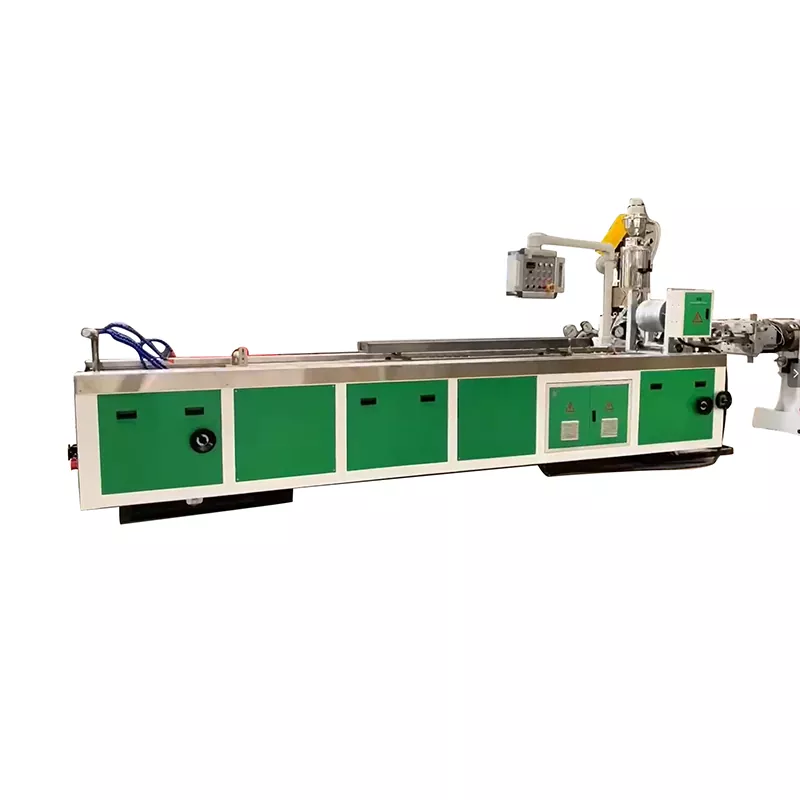
The PE Wood Plastic Landscape Profile Extrusion Production Line has become a key solution in modern outdoor construction material manufacturing. As global demand for eco-friendly, durable, and low-maintenance landscaping materials continues to grow, manufacturers are under pressure to improve efficiency, reduce costs, and ensure consistent product quality. This article provides a comprehensive analysis of how this production line works, what problems it solves, and why it is essential for businesses involved in wood-plastic composite (WPC) products. It also explores technical structures, production processes, applications, maintenance considerations, and investment value, helping readers make informed decisions in a highly competitive industry.
1. Introduction
The construction and landscaping industry is undergoing a significant transformation driven by sustainability and material innovation. Traditional wood materials, while aesthetically appealing, often suffer from issues such as rot, warping, and high maintenance costs. Meanwhile, pure plastic alternatives lack natural appearance and environmental friendliness. This gap has led to the rise of wood-plastic composites (WPC), especially PE-based landscape profiles.
At the center of this innovation lies the PE Wood Plastic Landscape Profile Extrusion Production Line, a highly specialized manufacturing system designed to produce durable, weather-resistant, and visually appealing outdoor materials. This system integrates polymer processing technology with wood fiber blending, enabling mass production of high-performance composite profiles used in decking, fencing, garden structures, and more.
2. What is PE Wood Plastic Landscape Profile Extrusion Production Line?
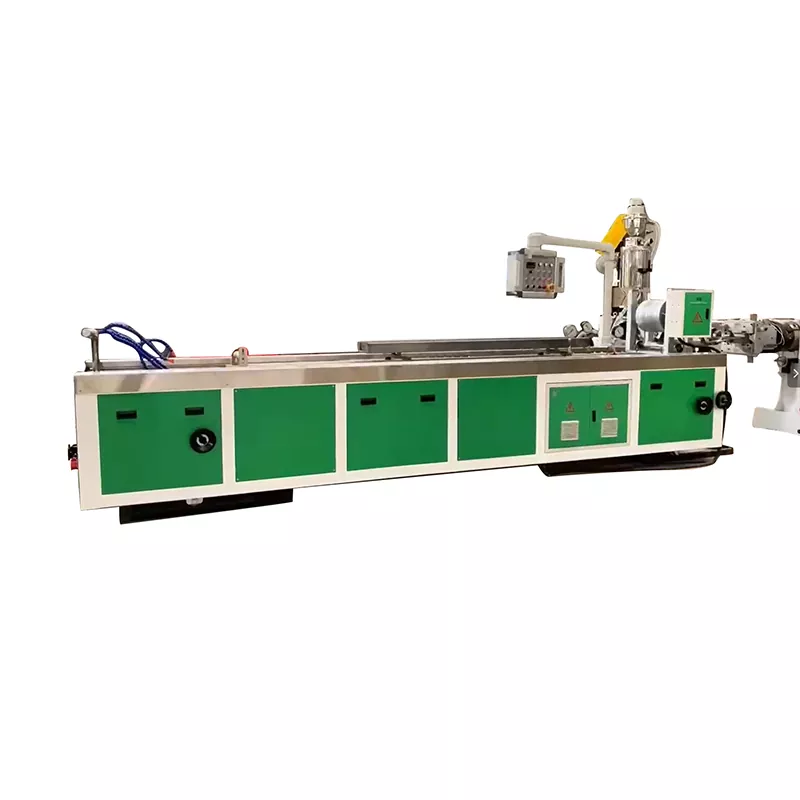
A PE Wood Plastic Landscape Profile Extrusion Production Line is a complete industrial system used to manufacture wood-plastic composite profiles using polyethylene (PE) as the primary polymer matrix combined with wood powder and additives.
This production line typically includes feeding systems, mixing units, extrusion machines, cooling calibration systems, haul-off units, and cutting machines. Together, they form a continuous process that converts raw materials into finished landscape profiles with consistent shape and quality.
Unlike traditional extrusion systems, this line is specially optimized for high filler content materials, ensuring stable processing of wood fibers and polymers under controlled temperature and pressure conditions.
3. Working Principle Explained
The working principle of this production line is based on thermoplastic extrusion technology. PE resin and wood powder are first mixed with additives such as lubricants, coupling agents, and stabilizers. The mixture is then fed into a high-efficiency twin-screw extruder.
Inside the extruder, heat and shear force melt and homogenize the material. The molten composite is pushed through a specially designed die to form landscape profiles with specific shapes such as decking boards, fence panels, or decorative trims. After extrusion, the profile is cooled, calibrated, and cut into desired lengths.
This continuous process ensures uniform density, stable dimensions, and high production efficiency.
4. Key Components of the Production Line
The production line consists of several critical units, each contributing to overall performance:
|
Component
|
Function
|
|
Feeding System
|
Automatically delivers raw materials into the mixer
|
|
High-Speed Mixer
|
Ensures uniform blending of PE, wood powder, and additives
|
|
Twin-Screw Extruder
|
Melts and compacts composite material under controlled conditions
|
|
Die Mould
|
Shapes molten material into desired profile forms
|
|
Calibration Table
|
Controls dimensional accuracy and cooling
|
|
Haul-Off Unit
|
Pulls finished profiles at consistent speed
|
|
Cutting System
|
Cuts profiles into required lengths
|
5. Raw Materials and Formulation
The performance of WPC profiles largely depends on raw material formulation. PE wood plastic systems typically use:
-
High-density polyethylene (HDPE) or low-density polyethylene (LDPE)
-
Wood flour (usually 40%–70%)
-
Coupling agents to improve bonding
-
Lubricants for smooth processing
-
UV stabilizers for outdoor durability
-
Color masterbatch for aesthetic customization
Proper formulation ensures optimal balance between strength, flexibility, and environmental resistance.
6. Core Advantages
-
High production efficiency with continuous operation
-
Stable product quality with minimal variation
-
Eco-friendly use of recycled materials
-
Weather resistance suitable for outdoor environments
-
Low maintenance requirements for end products
-
Flexible customization of profile shapes
7. Industry Pain Points Solved
Manufacturers in traditional wood and plastic industries face several challenges that this production line effectively addresses:
-
Material waste: Efficient processing reduces raw material loss
-
Inconsistent quality: Automated systems ensure uniform output
-
High labor costs: Reduced manual intervention lowers expenses
-
Environmental concerns: Utilization of recycled plastics and wood waste
-
Limited product durability: WPC profiles last significantly longer than wood
8. Applications in Landscaping and Construction
PE wood plastic landscape profiles are widely used in outdoor environments due to their durability and aesthetic appeal.
-
Garden decking systems
-
Outdoor fencing and railing
-
Park walkways and platforms
-
Landscape decoration structures
-
Commercial outdoor flooring
-
Seaside and humid environment installations
9. Technical Parameters Overview
|
Item
|
Specification
|
|
Extruder Type
|
Conical Twin-Screw / Parallel Twin-Screw
|
|
Production Capacity
|
150–600 kg/h (customizable)
|
|
Main Motor Power
|
37–160 kW
|
|
Cooling Method
|
Water cooling system
|
|
Profile Width Range
|
50–300 mm
|
|
Control System
|
PLC Intelligent Control
|
10. Step-by-Step Production Process
-
Raw material preparation and drying
-
Automatic mixing of PE, wood powder, and additives
-
Feeding into extrusion system
-
Melting and homogenization in extruder
-
Profile shaping through die mold
-
Cooling and calibration
-
Haul-off and traction control
-
Cutting and stacking of finished products
11. Maintenance and Troubleshooting
Proper maintenance ensures long-term performance and reduces downtime.
-
Regular cleaning of screw and barrel
-
Lubrication of moving mechanical parts
-
Inspection of heating elements and sensors
-
Calibration of extrusion speed and temperature
-
Monitoring wear of die molds
Common issues such as uneven extrusion or surface defects are often related to temperature imbalance or improper raw material mixing.
12. Investment Value and ROI Consideration
Investing in a PE wood plastic extrusion line offers strong return potential due to rising demand for sustainable building materials. The combination of low raw material cost and high product value allows manufacturers to achieve competitive profit margins.
Additionally, automation reduces labor costs, while the durability of WPC products ensures strong market demand across residential and commercial sectors.
13. Market Trends and Future Outlook
The global shift toward sustainable construction materials is accelerating adoption of wood-plastic composites. Governments and private sectors are increasingly supporting eco-friendly alternatives, which further drives demand for advanced extrusion systems.
Future developments will focus on higher automation, energy efficiency, and improved composite formulations that enhance strength while reducing production costs.
14. Frequently Asked Questions
Q1: What materials can be used in this production line?
A: PE resin combined with wood powder, calcium carbonate, and additives.
Q2: Is the production process environmentally friendly?
A: Yes, it utilizes recycled plastics and wood waste, reducing environmental impact.
Q3: How long do WPC products last?
A: Typically 15–25 years depending on usage conditions.
Q4: Can profile shapes be customized?
A: Yes, die molds can be designed according to customer requirements.
Q5: What is the required maintenance frequency?
A: Routine maintenance is recommended weekly, with full inspection monthly.
15. Conclusion and Contact Information
The PE Wood Plastic Landscape Profile Extrusion Production Line represents a major advancement in sustainable manufacturing technology. By combining polymer science with wood fiber reinforcement, it enables the production of durable, attractive, and environmentally responsible landscaping materials. For manufacturers seeking to upgrade production efficiency and expand into high-demand markets, this system provides a reliable and scalable solution.
Qingdao Kechengda Plastic Machinery Manufacturing Co., Ltd. is a professional manufacturer specializing in advanced extrusion equipment for plastic and wood-plastic composite production lines. With years of engineering experience and continuous innovation, the company provides reliable machinery solutions tailored to global customer needs.
If you are looking to start or upgrade your WPC production business, feel free to contact us for detailed technical consultation, customized solutions, and full production line support. Our engineering team is ready to help you build a more efficient and profitable manufacturing system.